
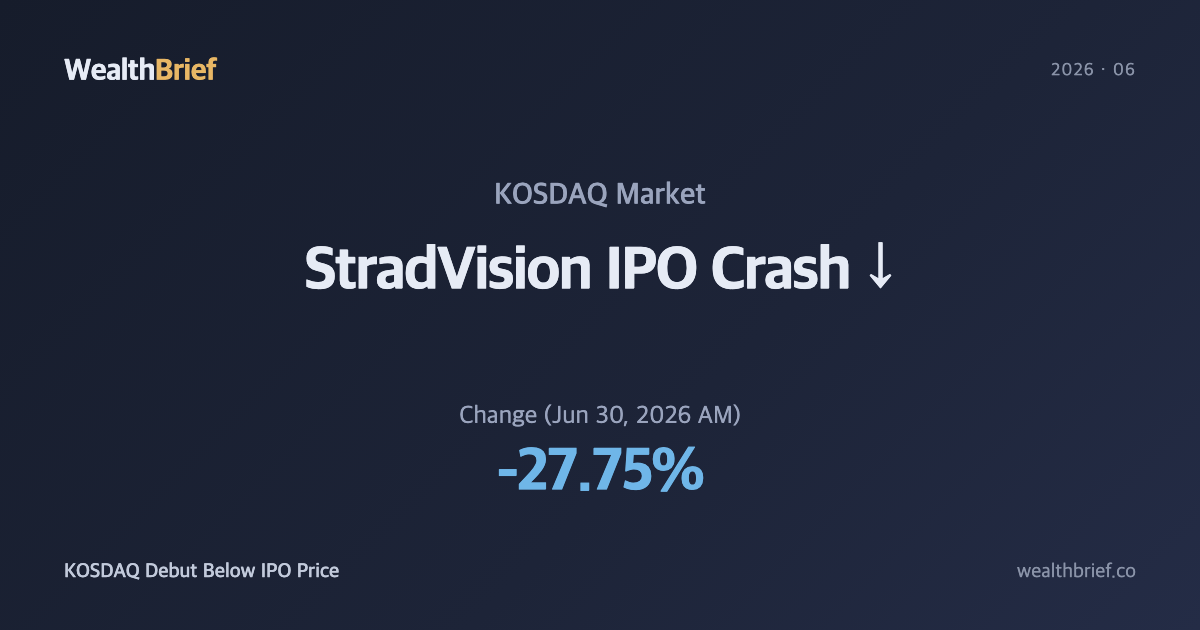
What Happened — As of the Morning of June 30, 2026
Autonomous-driving software company StradVision (475040) crashed -27.75% on its first day of trading on the KOSDAQ on June 30, 2026. Volume reached approximately 6.45 million shares, topping all KOSDAQ issues for the session. The IPO price was KRW 12,000, and the stock fell sharply below that level from the open.
Why It Fell — Multiple Headwinds on Debut Day
According to Etoday, CBC News, and other outlets, StradVision dropped more than 20% from its IPO price within the first minutes of trading. Pre-listing coverage had floated the possibility of a “four-bagger” first-day gain (known in Korean IPO parlance as a ttattabeul), but the market reaction was starkly different.
Several factors appear to have converged:
- Institutional forfeiture of allotted shares: Per Chosun Biz, a portion of the institutional allocation was forfeited (실권) prior to listing, suggesting demand from professional investors was cooler than expected.
- Rich IPO valuation: The growth story around AI-assisted autonomous driving was heavily priced in at the offering price. Investor skepticism about near-term revenue visibility translated into early selling pressure on the open.
- E2E autonomous driving contract announced the day before: StradVision disclosed on June 29 that it had signed an End-to-End (E2E) autonomous-driving mass-production development agreement with a global automaker (reported by ETNews, MoneyToday, Hellot). While a positive development, it was insufficient to offset the broader sell-off on listing day.
Background & Context — A Deep-Tech Startup Enters the Market
StradVision develops camera-based autonomous-driving perception software (SVNet) and reportedly supplies technology to global automakers including Hyundai, BMW, and Renault. The company came to market on the back of an AI and autonomous-driving growth narrative, but has not yet achieved profitability.
Newly listed stocks are inherently volatile in early trading, as IPO participants exit quickly to lock in gains (or cut losses), and lock-up expirations loom on the horizon.
Key Takeaways — New Listing Risk Factors
- Post-IPO volatility is extreme: Stocks that fall sharply below their offering price on day one can rebound — or continue lower. Short-term prediction is especially difficult.
- Path to profitability matters: The technology has credibility, but the pace of customer wins and breakeven timing will drive long-term value.
- Monitor lock-up schedules: Institutional and major shareholder lock-up expiry dates could add further selling pressure down the road.
Disclaimer
This article is a market commentary for informational purposes only and does not constitute a recommendation to buy or sell any security, nor investment advice of any kind. All investment decisions and their outcomes are solely the responsibility of the individual investor. Figures are as of the morning of June 30, 2026, and are subject to change with market conditions.
Leave a Reply