
차분한 투자자
-
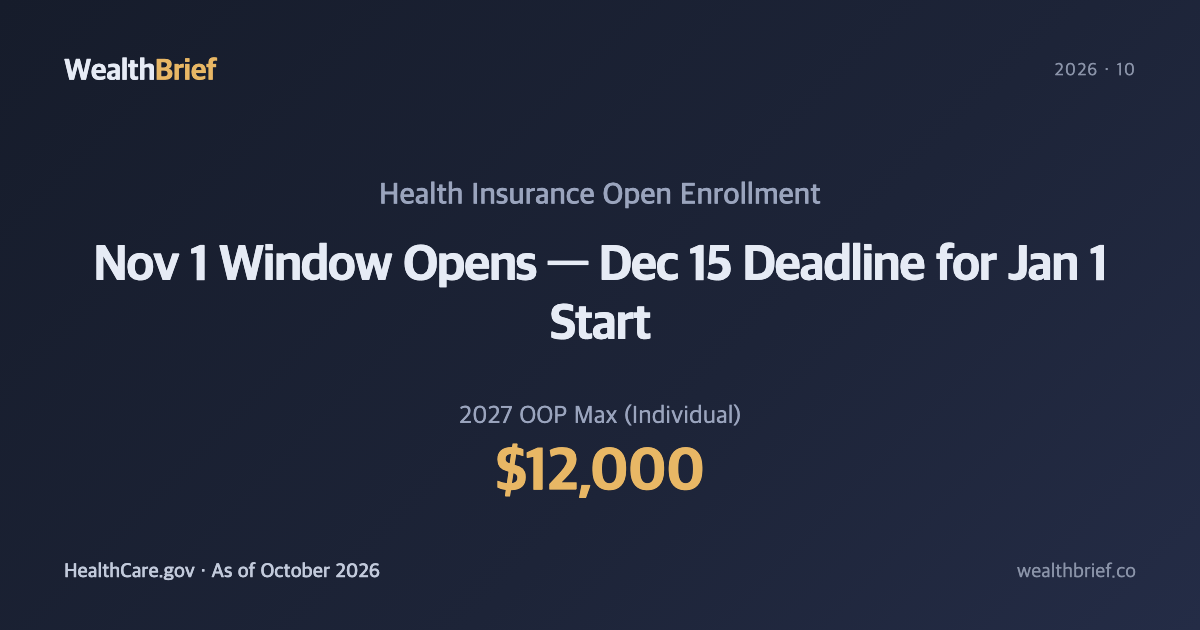
Open Enrollment 2026: Health Insurance Dates, Deadlines & Plan Tips
Open Enrollment for Health Insurance 2026: Key Dates Open enrollment for 2027 Marketplace coverage runs November 1 through January 15, 2027 in most states, per HealthCare.gov. Two dates inside that window actually drive your coverage start: December 15, 2026 — enroll by this date and your plan starts January 1, 2027. January 15, 2027 —…
-
Korea National Pension (NPS) Refund for Foreigners: How to Claim Every Won Back When You Leave
Korea National Pension (NPS) Refund for Foreigners: How to Claim Every Won Back When You Leave Last updated: October 2026 | 7 min read If you worked in South Korea, your employer and you each contributed 4.5% of your gross salary every month to the National Pension Service (NPS / 국민연금공단). That is a combined…
-
Hybrid vs Variable Mortgage Rates in Korea: Which Is Better Right Now in 2026?
Hybrid vs Variable Mortgage Rates in Korea: Which Is Better Right Now in 2026? The Bank of Korea raised its base rate in both July and August 2026, pushing variable mortgage rates above 6% per annum. Borrowers across Korea are now asking: “Should I switch to a hybrid fixed-rate mortgage before rates climb even higher?”…
-
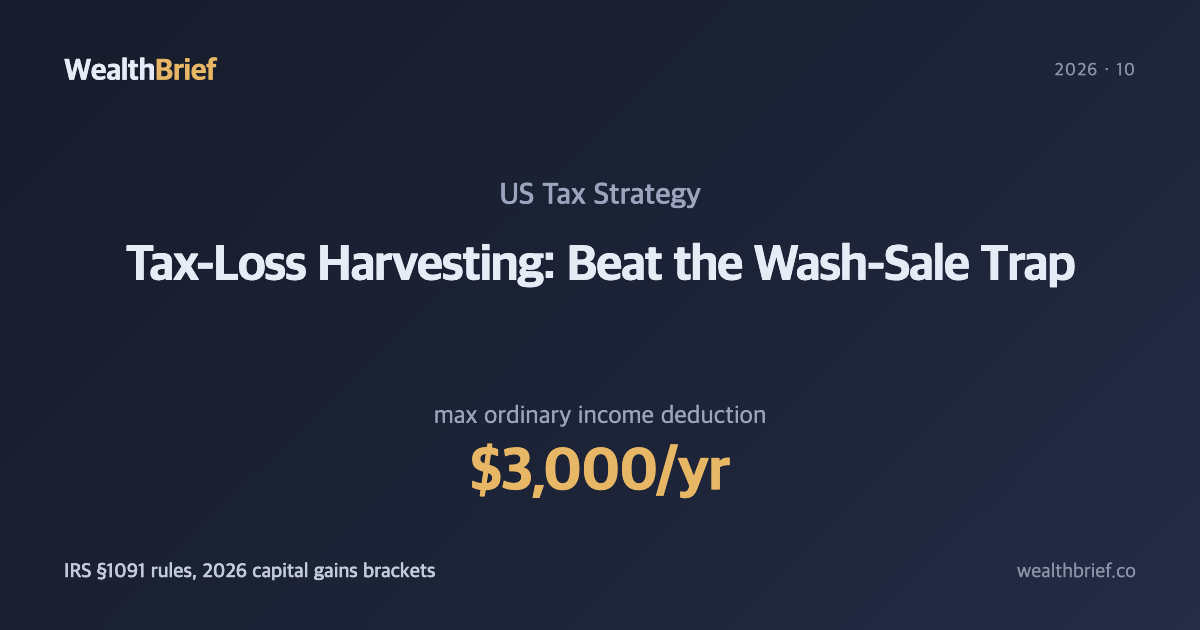
Tax-Loss Harvesting Explained: Rules, Wash-Sale Trap, and How to Do It in 2026
Markets swing in both directions, and a portfolio full of losses isn’t fun to look at. But those losses are worth something — if you know how to use them before December 31. Tax-loss harvesting (TLH) is the IRS-approved technique of deliberately selling investments at a loss to offset capital gains elsewhere, cutting the tax…
-
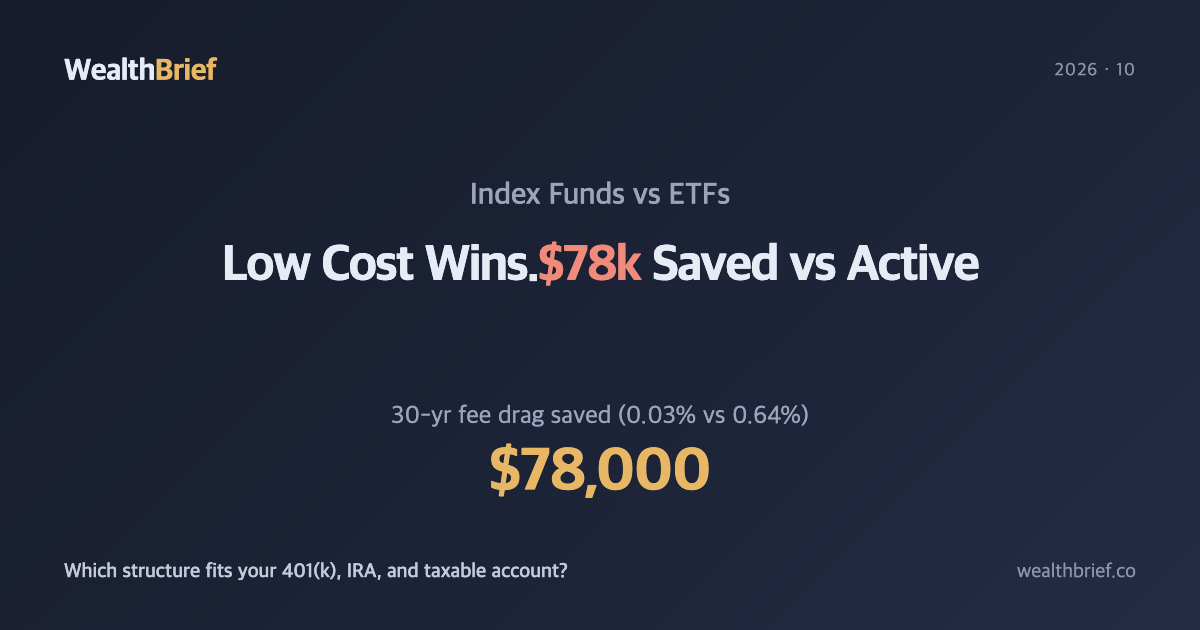
Index Funds vs ETFs: Which Should You Actually Use?
The Confusion That Costs Investors Thousands “Index fund” and “ETF” get used interchangeably on Reddit, YouTube, and even in mainstream financial coverage. They’re not the same thing. Index fund is a strategy — it means the fund tracks a market index (like the S&P 500) instead of paying a manager to pick stocks. ETF is…
-
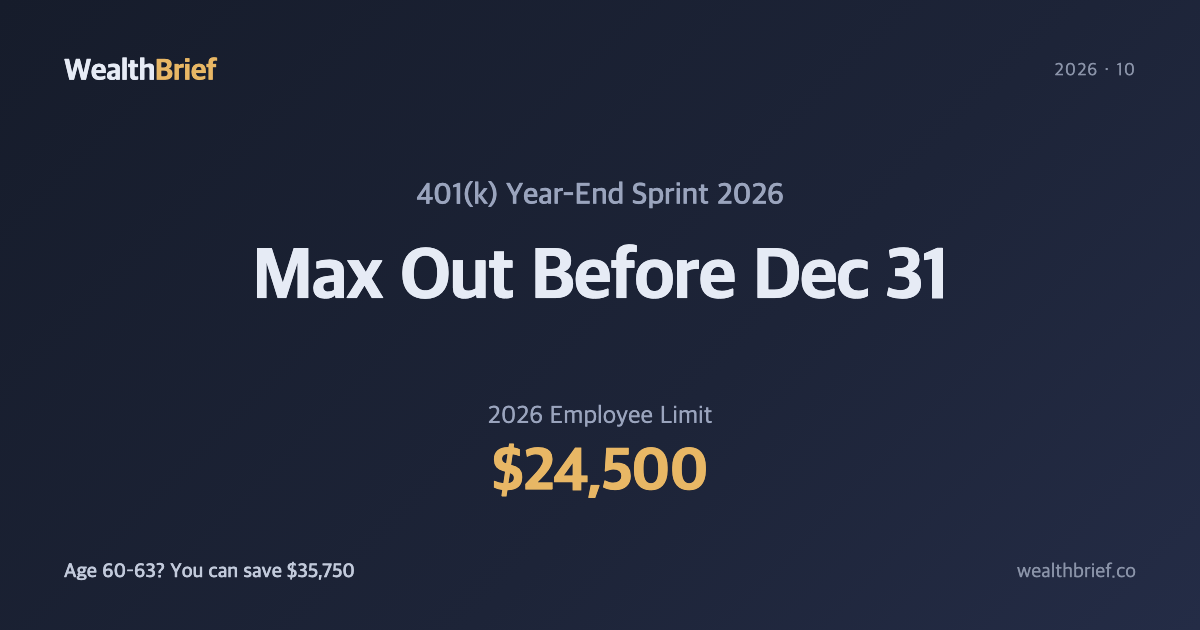
401(k) Year-End Sprint 2026: Max Out Before Dec 31
You’ve Got 81 Days — Here’s How to Use Them The 401(k) deadline is December 31, 2026 — not April 15. Whatever you don’t put in by New Year’s Eve is gone forever as 2026 tax-sheltered savings. As of mid-October, most workers have roughly 5 to 6 paychecks left in the year. That’s not much…
-
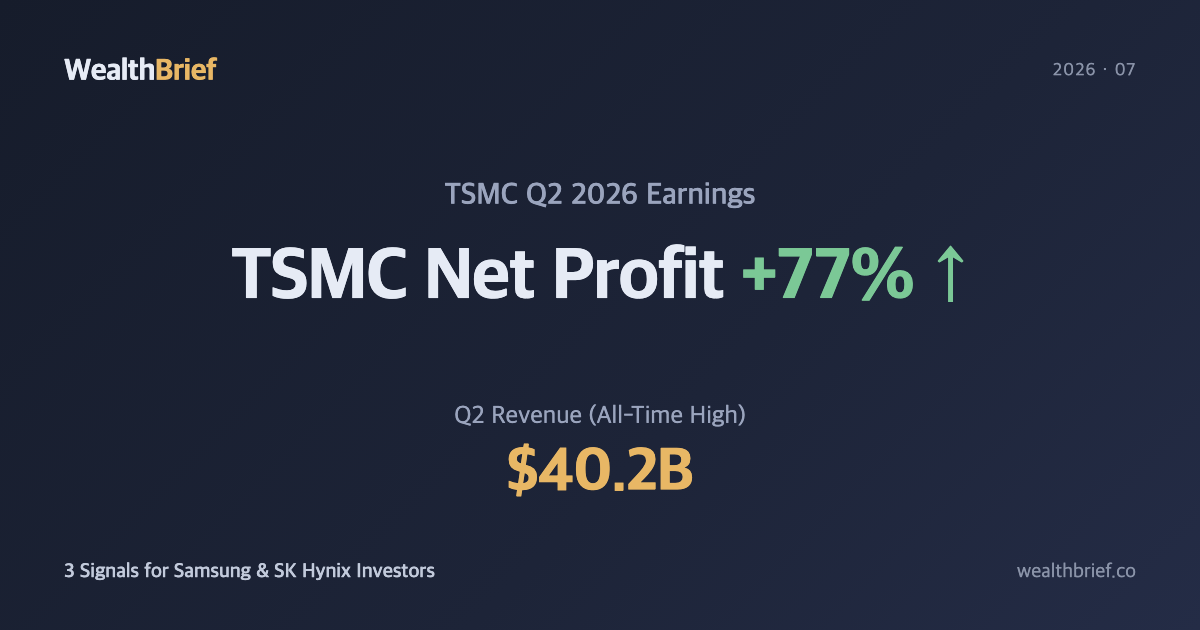
TSMC Profit Jumps 77%: 3 Signals the Foundry Boom Sends to Samsung and SK Hynix
TSMC Q2 2026: The Numbers That Matter On July 16, 2026, TSMC reported its second-quarter results — and blew past every forecast. Revenue hit $40.2 billion, a new all-time high for the fifth consecutive quarter, while net profit surged more than 77% year-on-year to approximately NT$1.13 trillion (around $22.6 billion USD). (Source: TSMC Q2 2026…
-
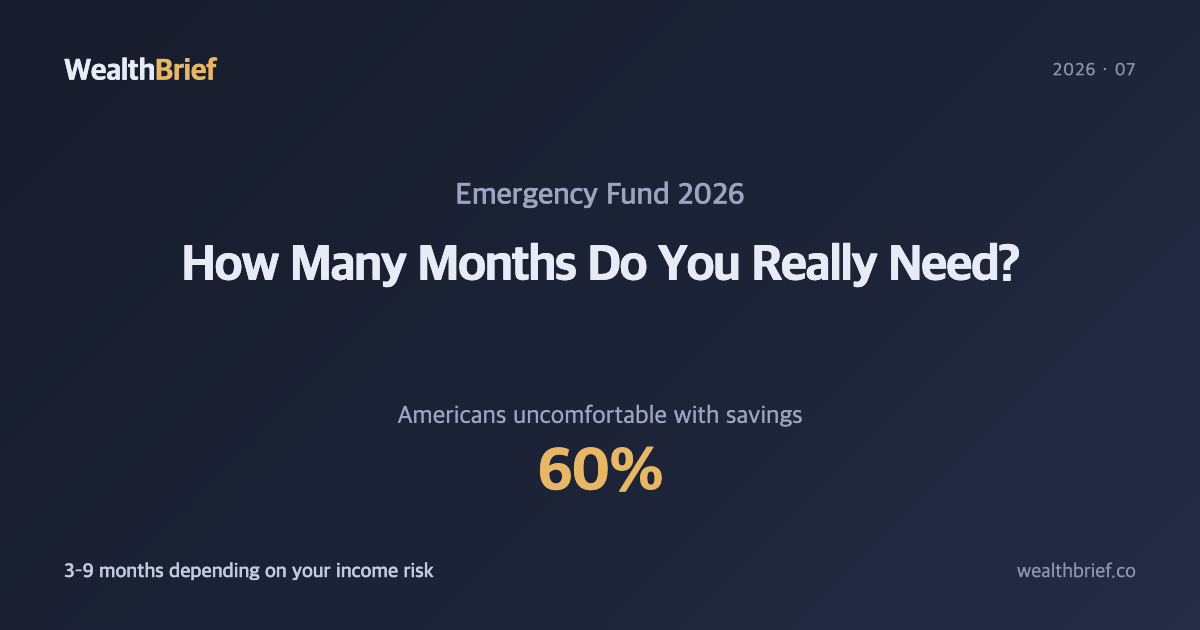
Emergency Fund 2026: How Many Months Do You Really Need?
Sixty percent of Americans say they’re uncomfortable with their level of emergency savings — and 31% describe themselves as “very uncomfortable,” according to Bankrate’s 2026 Emergency Savings Report (February 2026). Separate research from U.S. News found that 43% of adults couldn’t cover a $1,000 surprise expense without borrowing. That’s the baseline: a lot of people…
-
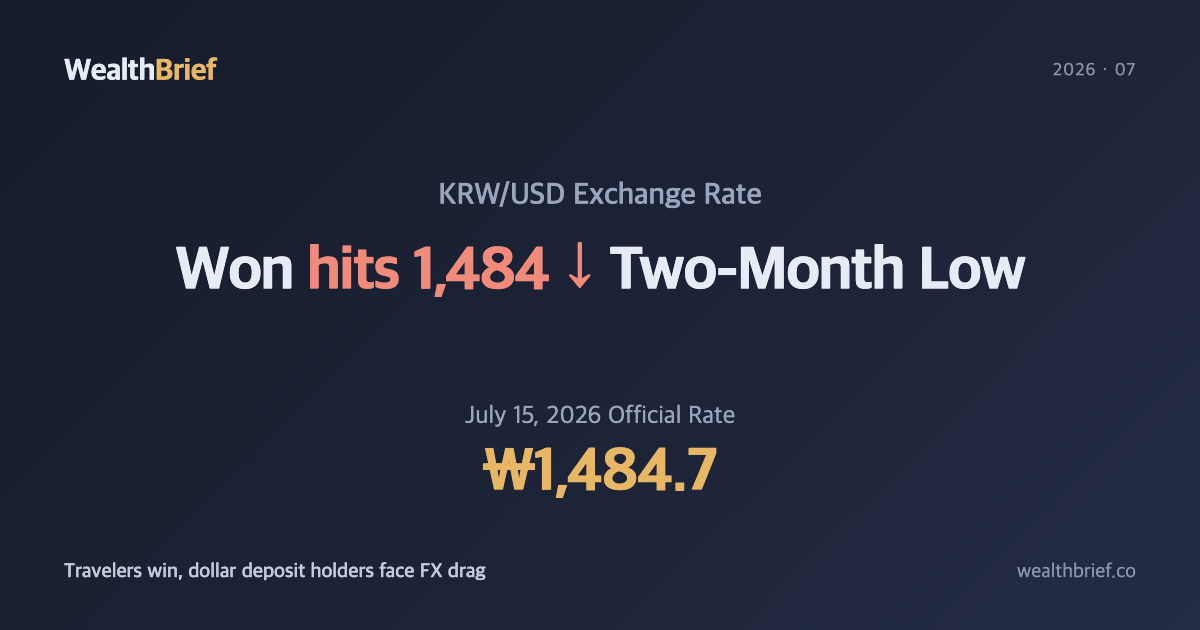
Won at 1,484: What a Two-Month Low Dollar Rate Means for Your Money
The Won Just Hit a Two-Month Low at 1,484 — Here’s What It Means for Your Money On July 15, 2026, the Korean won closed at 1,484.7 per U.S. dollar, shedding 8.3 won in a single session — the weakest closing rate in two months (Yonhap, Chosunbiz, July 15, 2026 official rate). An 8-won drop…
-
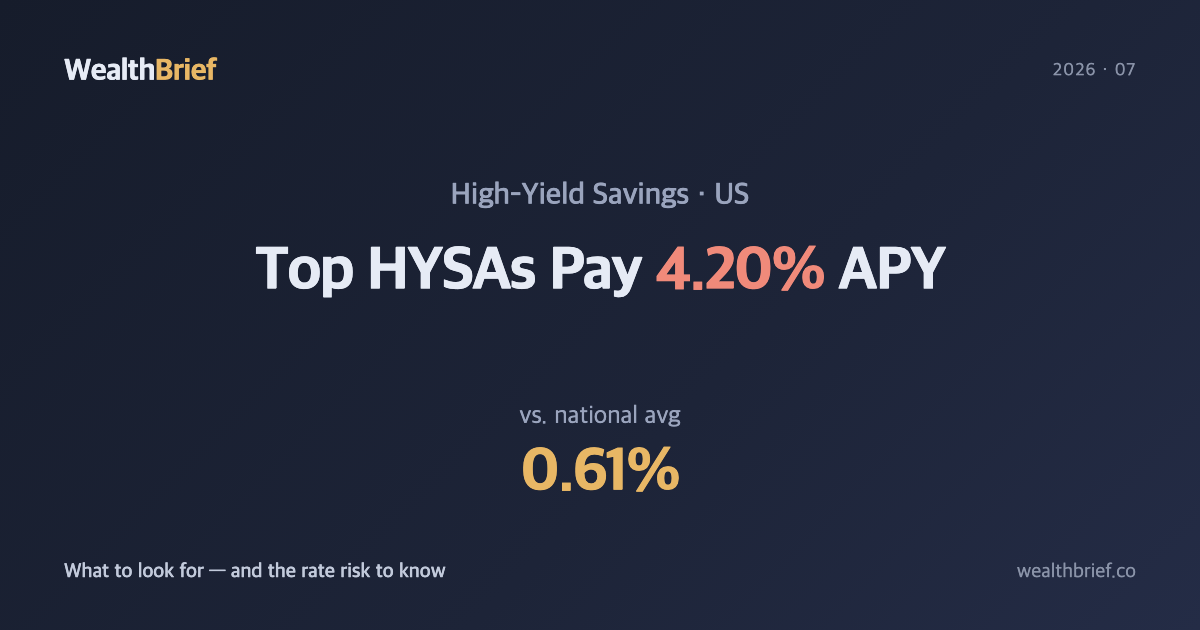
Best High-Yield Savings Accounts July 2026: 4.20% APY
Why Your Regular Savings Account Is Working Against You The national average savings account rate sits at 0.61% APY — that’s the figure Bankrate pulled from its survey of banks on July 14, 2026. Meanwhile, the best high-yield savings accounts (HYSAs) are paying 4.15% to 4.20% APY right now, at federally insured banks, with no…